



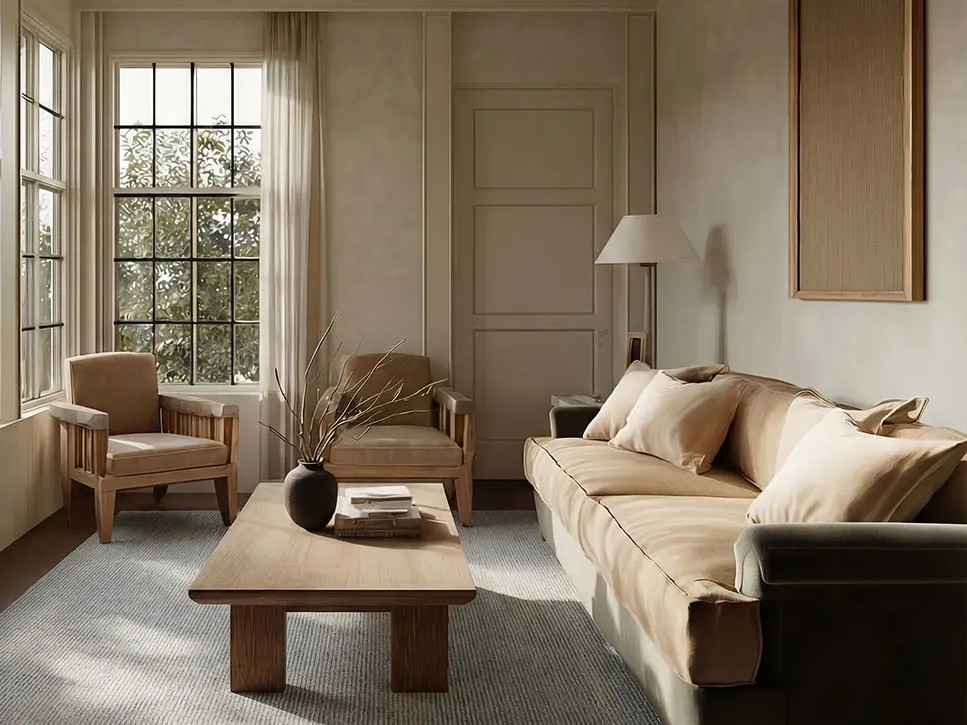
Ask a designer where a room really begins, and many will point to the floor. Long before the sofa or the artwork, a rug sets the proportions of a space, its palette, and its sense of ease. It is the most quietly influential piece in a room, and often the most overlooked. The right area rug is not something to add once everything else is in place; it is the foundation you build a room around, and it is worth taking the time to get right.
Why a Room Begins at the Floor
There is a reason our design team often starts a living room not with the sofa, but with the rug. A rug anchors the seating, defines where a room begins and ends, and sets the tonal key for every other choice that follows. Its colors inform the upholstery; its texture balances the hard surfaces of wood and stone, and its scale tells the eye how the space is meant to be used. A quietly textured neutral like Jaipur Living’s Sublime Texture shows how much a calm, well-chosen foundation can do, holding a room together without ever competing with it.
A well-chosen rug also does quiet, practical work. It softens sound in rooms with high ceilings, adds warmth as the seasons turn, and creates a sense of intimacy in an open floor plan. When a room feels vaguely unfinished, the culprit is frequently on the floor. Begin there, and the rest of the design tends to fall gracefully into place.
Finding the Right Size and Placement
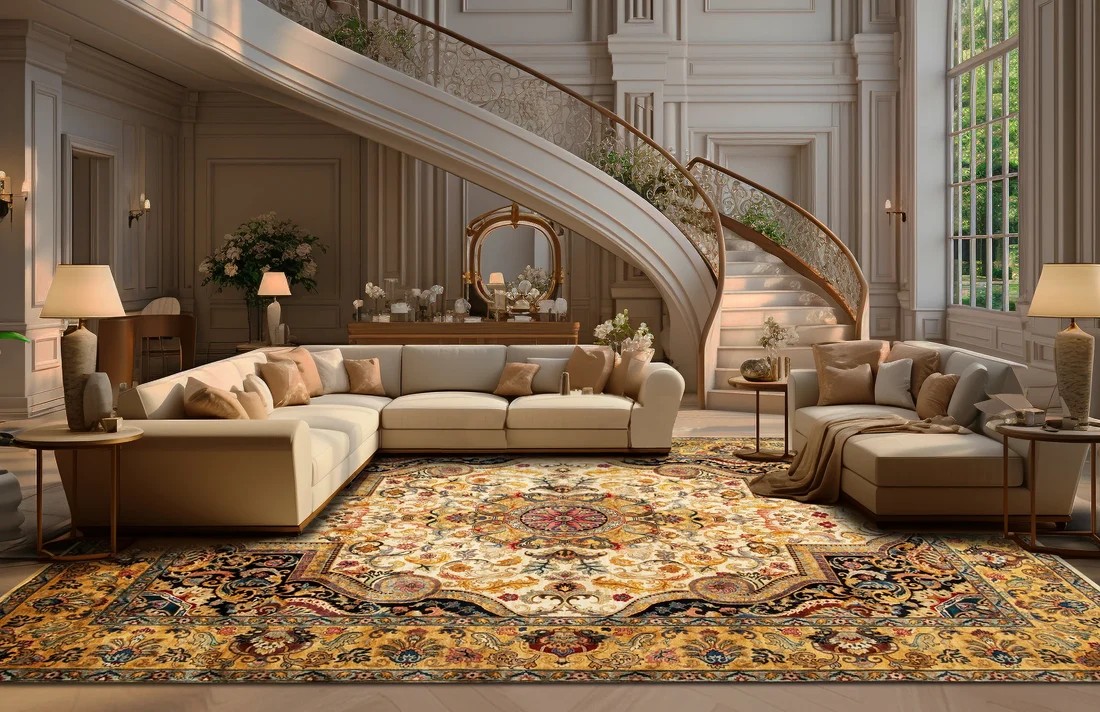
The most common mistake we see is a rug that is simply too small. An undersized area rug leaves furniture stranded and makes even a generous room feel adrift. As a general rule in the living room, the front legs of every major seating piece should rest on the rug, and ideally all four legs sit comfortably within its borders. Aim to leave an even margin of bare floor, roughly eight to eighteen inches, framing the rug like matting around a piece of art. A hand-knotted Oriental such as Samad’s Jewel Ivory/Blue, a classic medallion design offered in generous room sizes, shows how choosing scale generously lets a rug read as intentional rather than incidental.
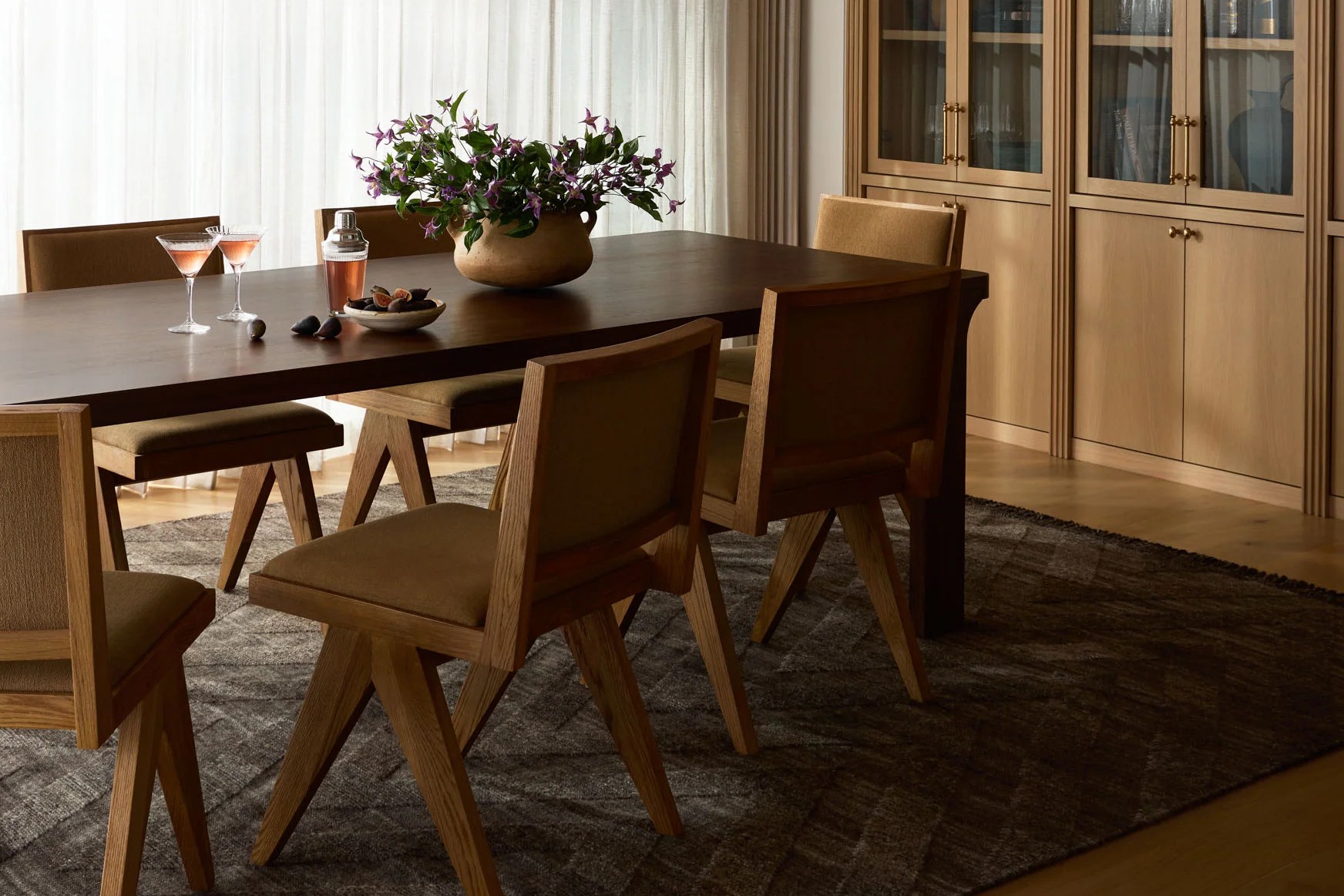
Dining rooms follow their own logic. Here the rug should extend at least twenty-four inches beyond the edge of the table on all sides, so chairs remain on the rug even when pulled out. In the bedroom, a large rug set beneath the lower two-thirds of the bed gives you that welcome softness underfoot each morning. When you are between two sizes, the larger one is almost always the wiser choice. Before you commit, it helps to tape out the rug’s footprint on the floor and live with it for a day or two. Seeing the exact dimensions in the room removes the guesswork and makes the right decision feel obvious.
The Quiet Confidence of Layering
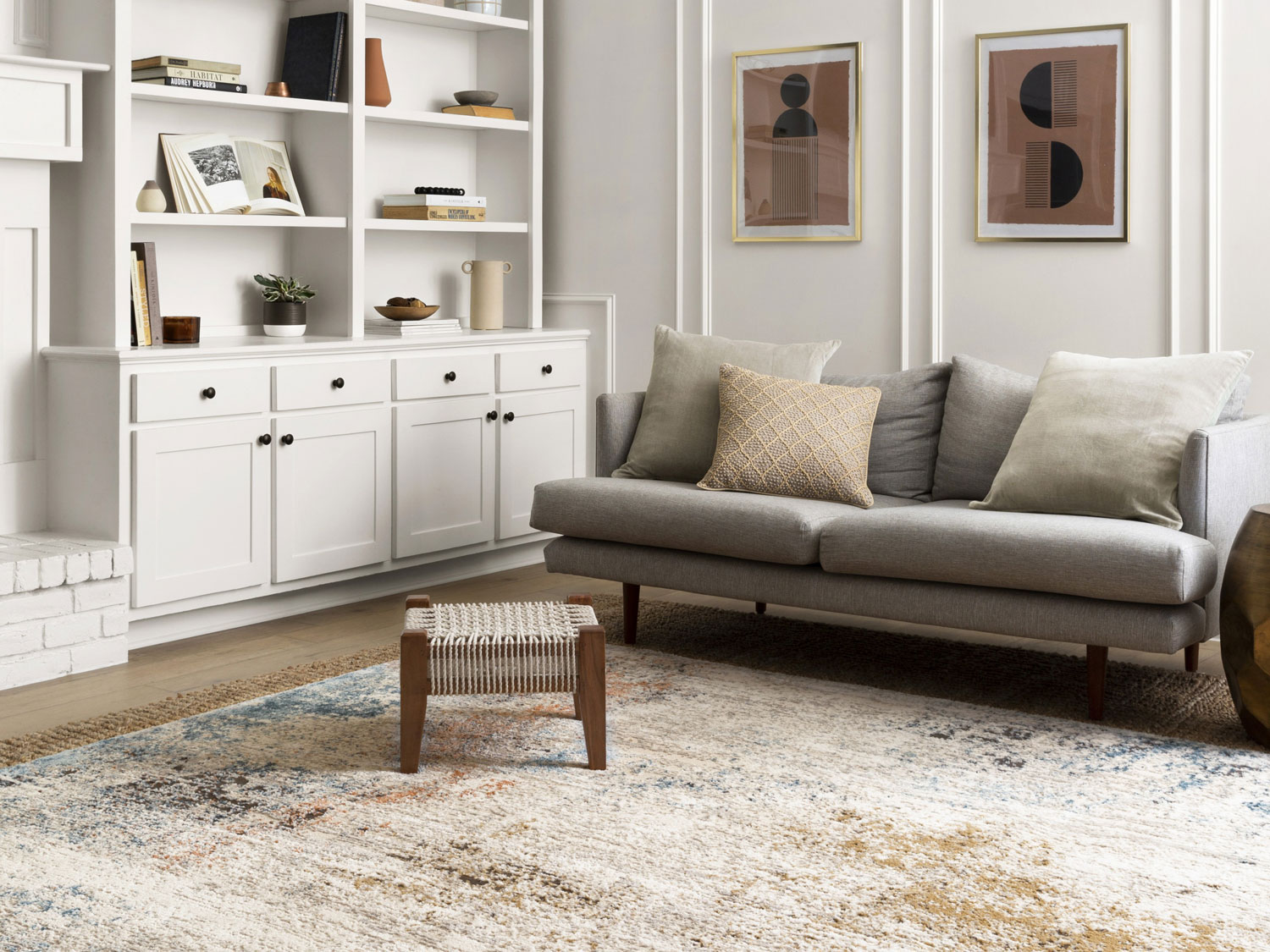
Layering is where a room moves from correct to collected. The approach is simple in principle: begin with a large, natural foundation such as a jute or sea-grass base, then center a patterned rug on top to add color and character. A distressed vintage-Persian design like Jaipur Living’s Boheme, its Persian florals softened into layered blues and grays, set over a neutral hand-woven base such as Loloi’s Angeline, feels effortless and lived-in. A coastal braided piece like Capel’s Bear Creek brings texture that suits our Tidewater light beautifully.
The key to layering with confidence is restraint in palette and generosity in texture. Let one rug lead and the other support. Keep the colors within a shared family and allow the contrast to come from weave and pattern rather than competing hues. Done thoughtfully, layering adds the kind of depth that makes a space feel gathered over time rather than assembled in an afternoon.
A Foundation Made to Last
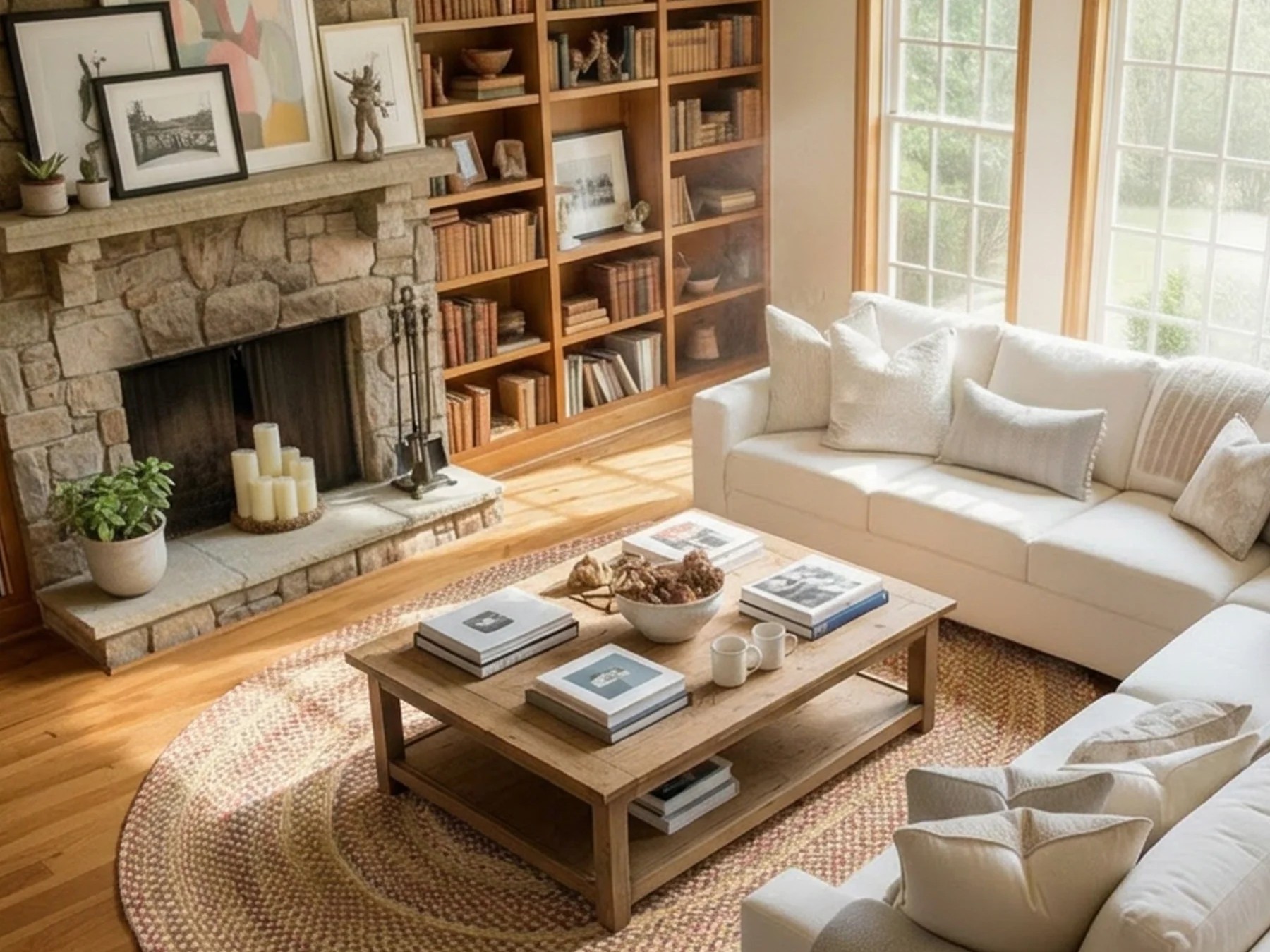
Not all rugs are created equal, and the difference reveals itself over years rather than weeks. A hand-knotted wool and silk rug from Samad is built the way fine rugs have always been made, knot by knot, with a density and depth of color that machine production cannot replicate. Pieces like these develop a soft patina underfoot and are genuinely made to be passed down. The artisan looms behind a house such as Jaipur Living carry that same tradition of skilled handwork, while Capel’s American braided heritage offers a more casual, hard-wearing character with its own quiet pedigree.
Construction matters because a rug lives a demanding life. It absorbs the traffic of a household, the pull of chairs, the presence of children, and pets. Wool is naturally resilient and forgiving; hand-knotted foundations hold their shape, and a well-made rug rewards its owner with decades of use. With simple care, a regular rotation to even out wear and prompt attention to the occasional spill, a fine wool rug only grows more handsome with age. At The Shops, we think of a rug like this the same way we think of a bench-made sofa or a solid wood table, as a piece you choose once and keep for good rather than replace often.
The Piece Worth Getting Right
A rug rewards patience. Get the scale, the pattern, and the palette right, and everything you place on top of it tends to settle into place on its own. It is one of the few purchases that shapes a room for years rather than seasons, which is reason enough to choose slowly and live with the decision before you commit. Whether you are drawn to a hand-knotted Oriental, a vintage-Persian weave, or a quiet textured wool, the best rug is the one that still feels right long after the newness has worn off. And if you ever want to see how these pieces feel underfoot, you are always welcome to wander the Carolina Carpets collection in our Williamsburg showroom.