



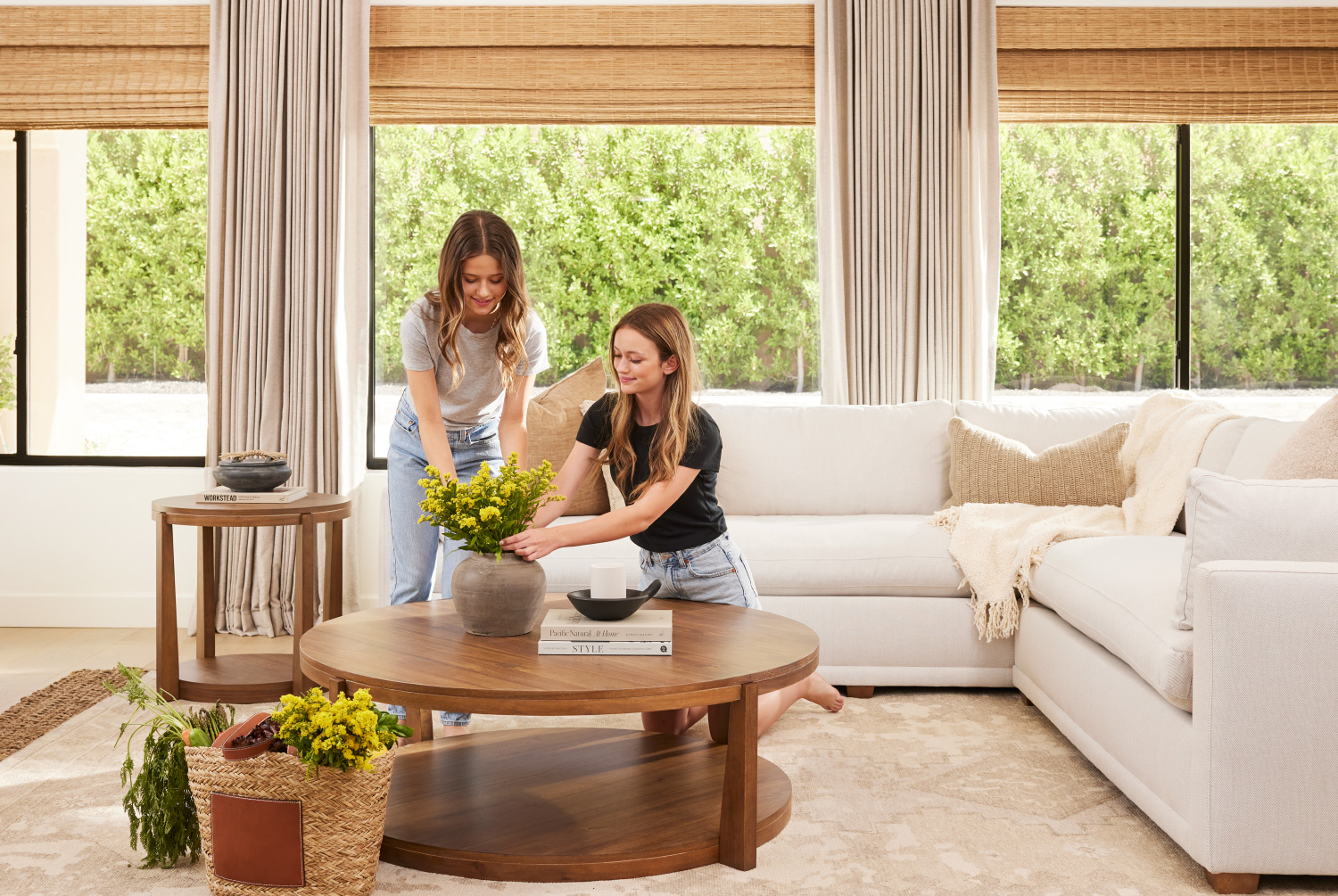
The coffee table is one of the few surfaces in a home that lives at eye level when you sit down to truly rest. It is where you set your morning cup, arrange a book you mean to finish, and find yourself pausing on the way through the room just to admire what you have gathered. It is, in its way, the most personal surface in the living room. And learning how to style a coffee table well does not require a design degree. It requires knowing which five elements, when thoughtfully combined, make a vignette feel curated rather than simply filled.
1. A Coffee Table That Earns Its Presence
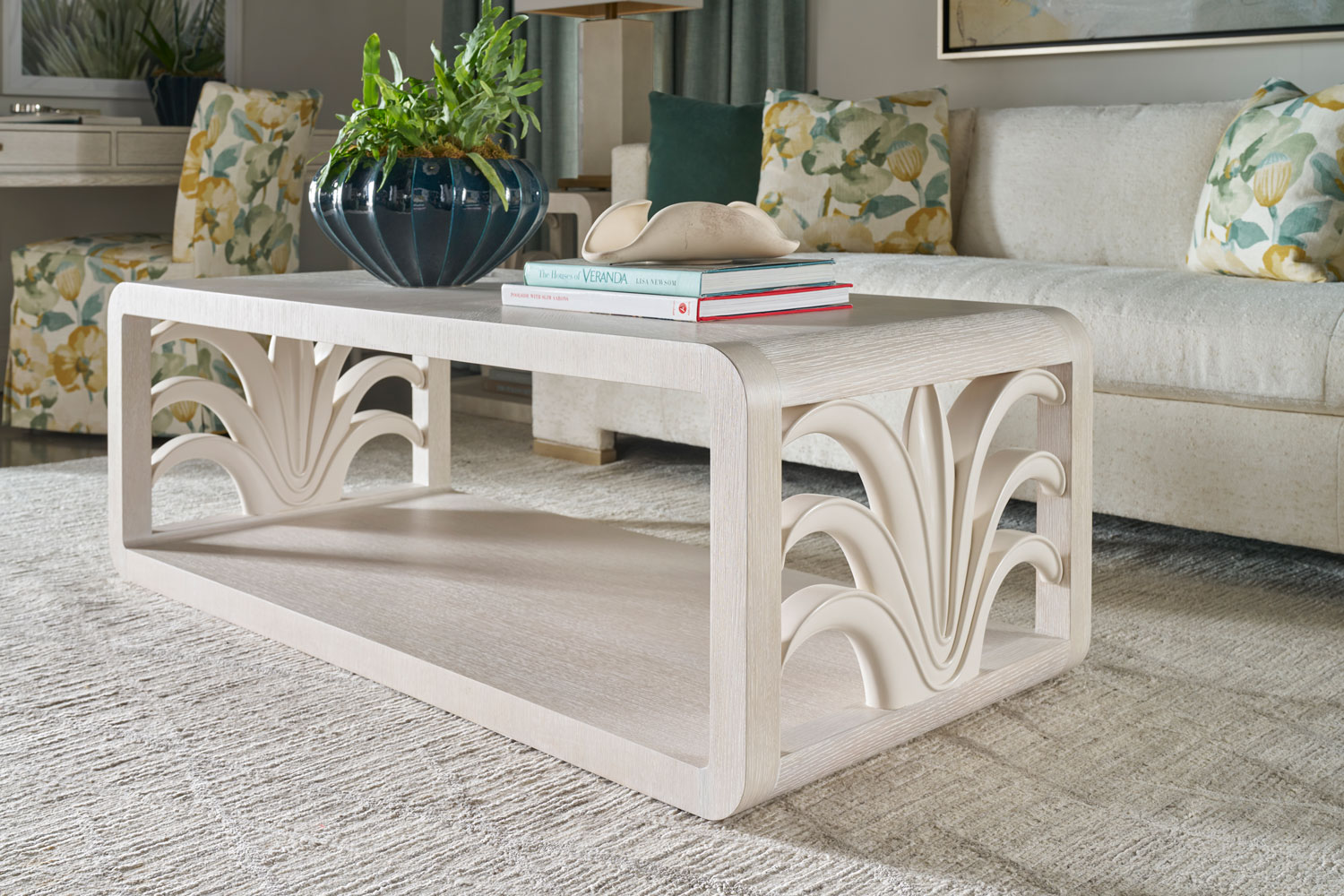
Before anything is placed on the surface, the surface itself must be worthy of attention. A coffee table with visual substance, with a generous slab top, a hand-applied finish, or a silhouette that reads as an investment piece, gives everything arranged on it something to lean into. At The Shops at Carolina Furniture of Williamsburg, we carry coffee tables designed with exactly that kind of intention. Hickory White, for example, builds tables with the same bench-made craftsmanship that defines their entire collection, resulting in pieces that anchor a room before a single object is placed on them.
The shape and height of your table also determine how a vignette is perceived. A lower, wider table invites sprawling arrangements with breathing room between groupings. A more compact design calls for tighter, more intentional compositions. Knowing which you are working with changes everything about how the remaining four elements come together.
2. One Tray to Ground the Whole Arrangement
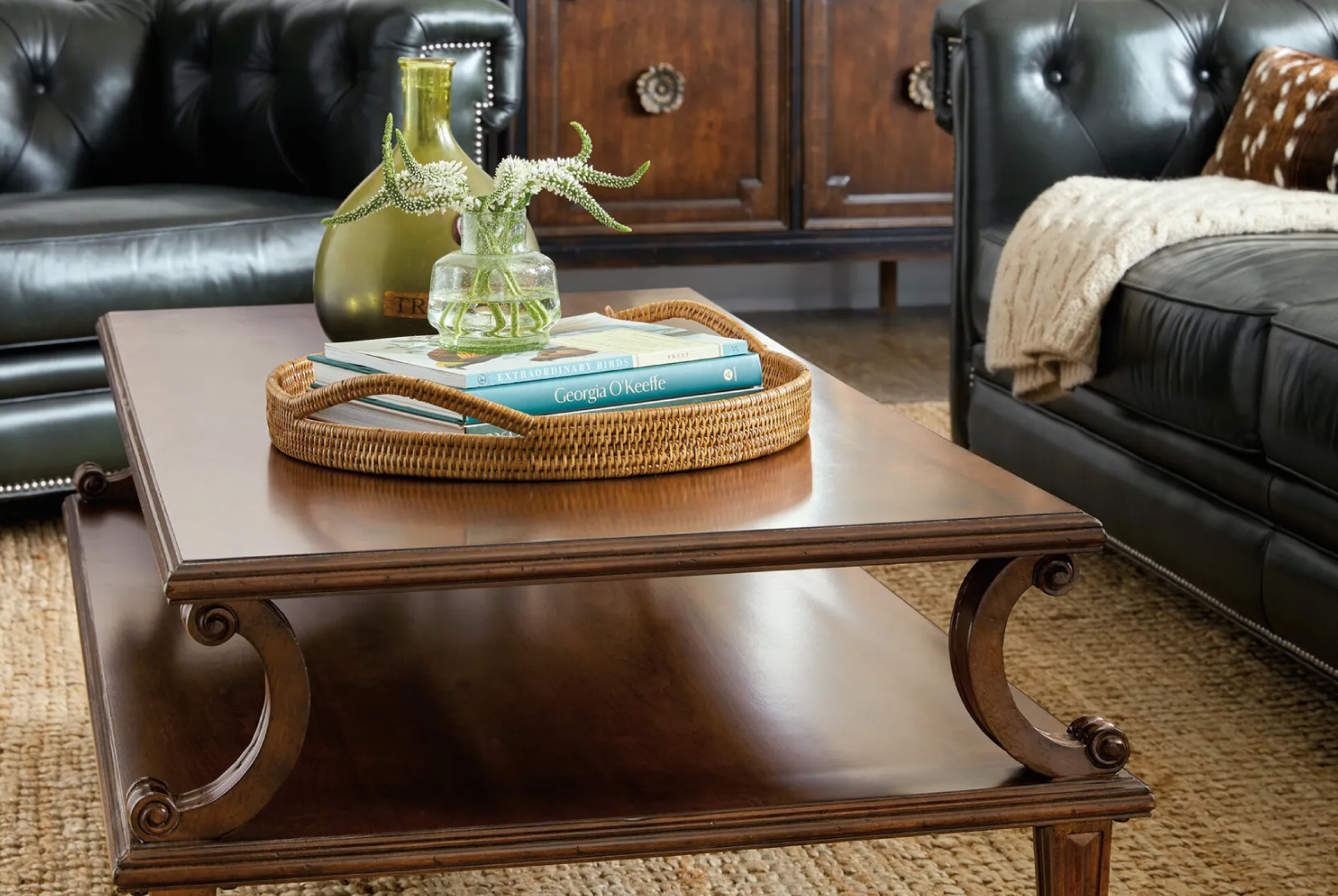
A tray is not optional. It is the organizing principle of a well-styled coffee table, the element that transforms a loose collection of objects into a deliberate composition. Without it, even beautiful pieces can feel scattered. With it, there is visual logic, a contained world within the larger surface. Theodore Alexander offers decorative trays and lacquered catchalls that bring both structure and elegance to the arrangement. Their finishes play beautifully against the objects placed within them.
Choose a tray that contrasts with your table surface in either texture or tone. A richly lacquered tray on a matte wood surface creates the kind of layering that reads as considered. A woven or wrapped tray on a polished stone table introduces warmth and tactile contrast. The goal is a relationship between surface and container, not a match.
3. Height Variation That Creates Visual Movement
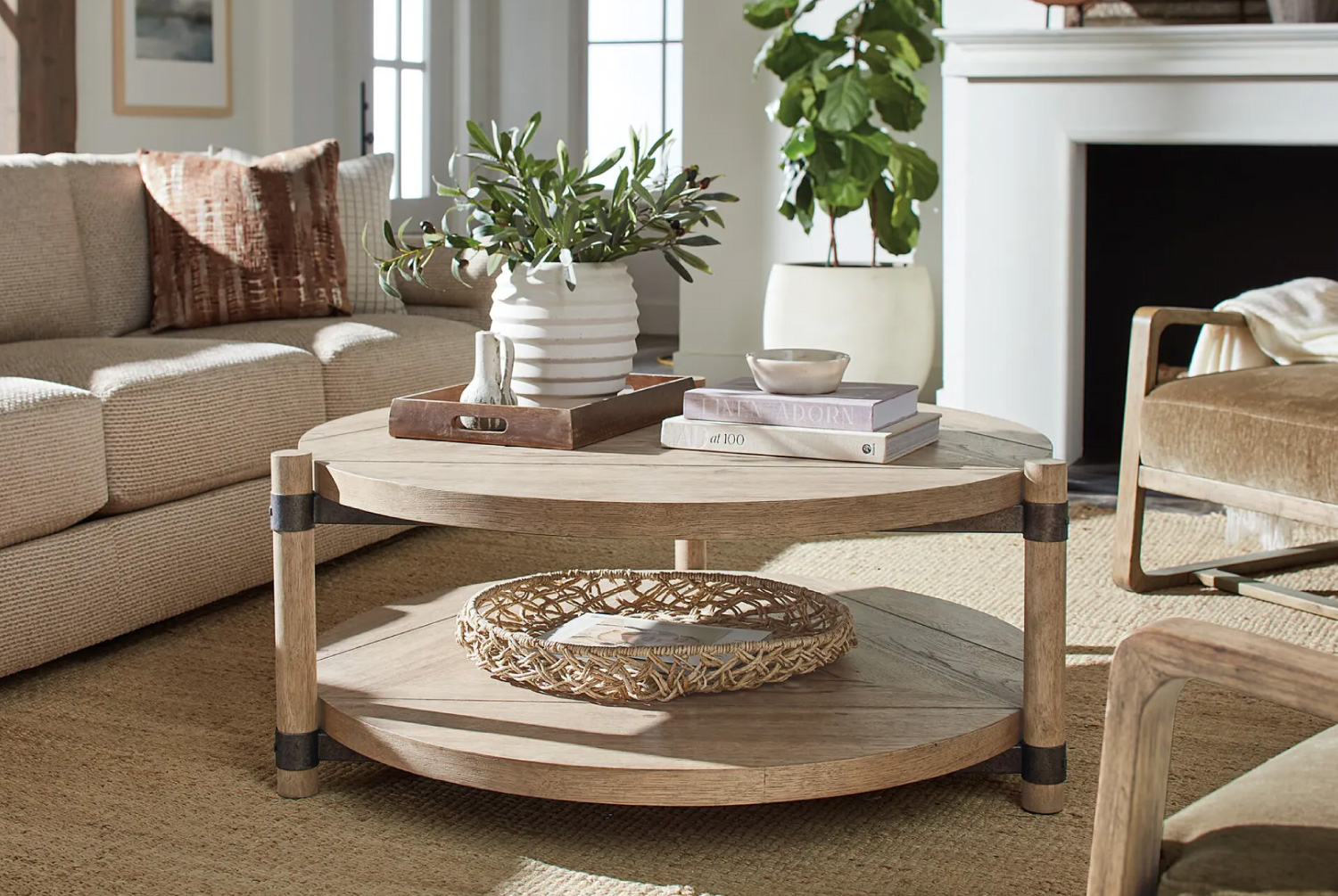
A flat arrangement reads as stagnant. What gives a vignette its vitality is the relationship between objects of varying heights. The way a tall candlestick pulls the eye upward while a low stack of books draws it back down. Think in terms of a loose visual hierarchy: one tall element, one medium element, and one low element within the tray or grouping, allowing the eye to travel naturally from piece to piece. Maitland Smith, long celebrated here in Williamsburg for their extraordinary decorative objects and accessories, produces exactly the kind of sculptural pieces that serve as the tall anchor in this arrangement, objects with genuine presence that need no explanation.
The books deserve particular mention. A curated stack of two or three volumes, positioned just outside the tray, performs double duty as both height element and personal expression. Choose spines that feel considered rather than random: design books, art books, or volumes whose covers carry a color that echoes the room’s palette.
4. Something Living, Something Gathered
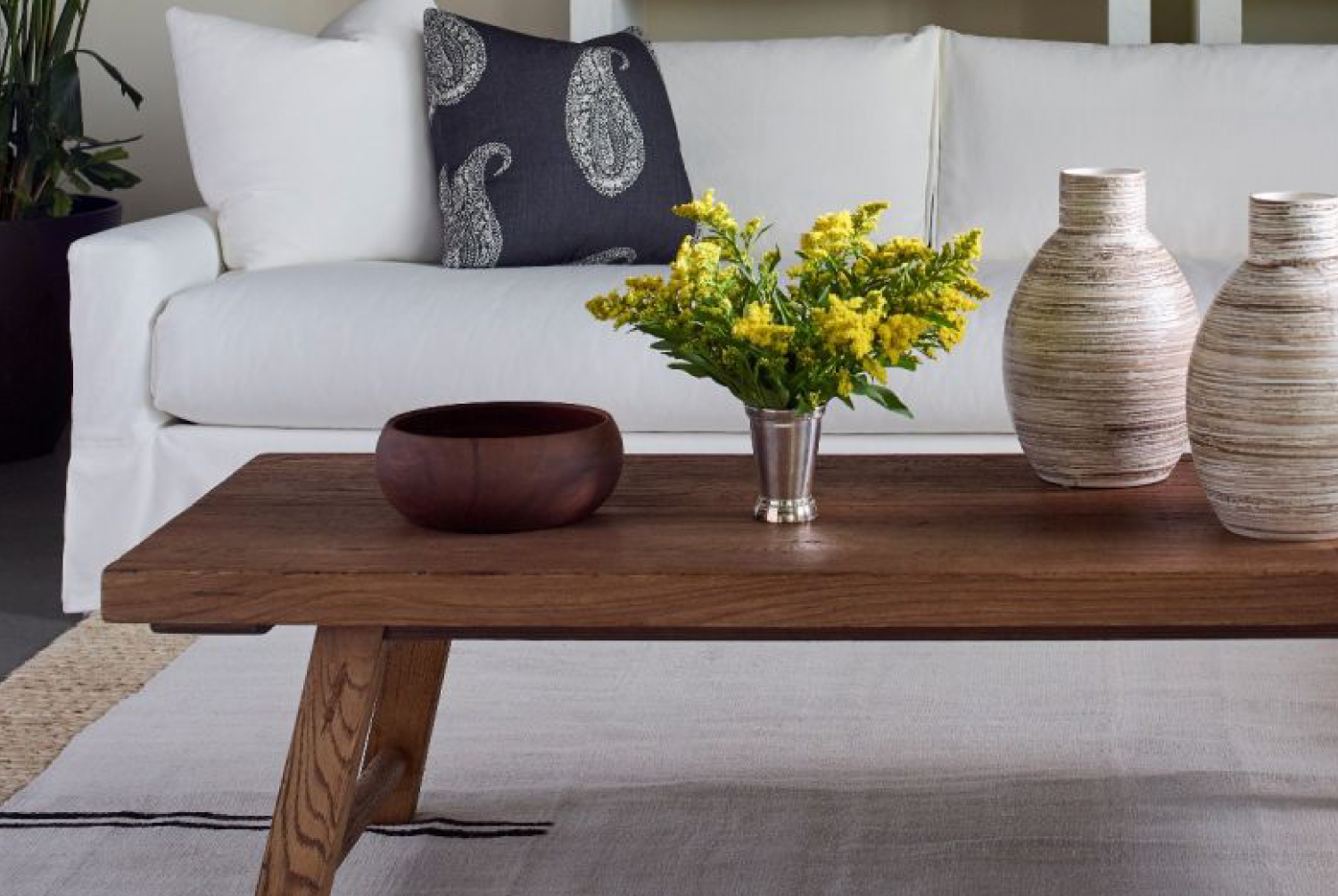
Every great vignette needs one element that nods to the organic world. A small arrangement of fresh flowers in a sculptural vessel, a single stem of dried botanicals; a clipping of eucalyptus laid loosely across the surface. This is the element that changes most often and keeps the space feeling tended rather than staged. Artistica Home produces vessels and objects that hold their own as sculpture even when empty, making them ideal for a surface that shifts with the seasons.
Alongside the living element, there should be something gathered or personal. A small stone from a meaningful place, a ceramic object acquired on a trip, a decorative box that holds something you love but do not need on display. This is the element that tells the story of the person who lives in the room, and it is the one no designer can choose for you. These two elements together, the natural and the personal, are what give a vignette its warmth.
5. The Edit That Makes Everything Else Work
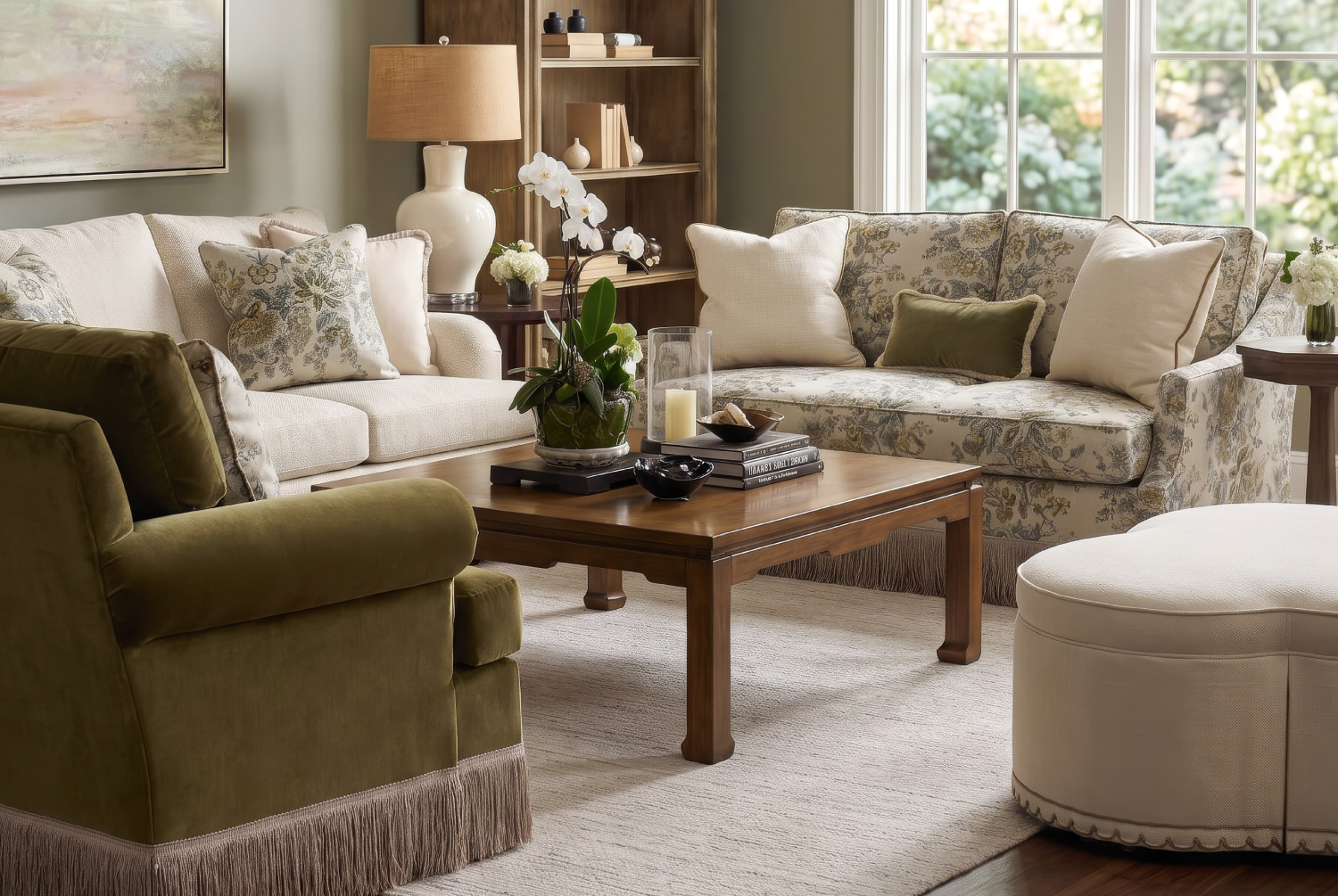
The fifth element is not an object at all. It is space. The discipline of leaving portions of the table surface clear, of choosing four strong objects rather than eight average ones, is what separates a vignette that invites admiration from one that simply invites clutter. Here in Williamsburg, our design team often reminds clients that a coffee table is at its most compelling when the negative space feels as deliberate as the objects placed within it.
Resist the impulse to fill every inch. Let the table’s surface breathe between groupings. A tray arrangement anchored on one side with a single sculptural object placed at the opposite corner, and open surface in between, creates a visual pause that makes both elements more compelling. This is the edit. It is also the element most homeowners’ skip. And it is the one that makes all the others work.
A beautifully styled coffee table begins with a beautifully chosen one. At The Shops at Carolina Furniture of Williamsburg, we carry coffee tables and decorative accessories across an extraordinary range of styles, from transitional to traditional to streamlined contemporary, with over 400 furniture lines to draw from. Whether you are starting from scratch or simply refreshing a living room that is ready for something new, our design team is here to help you find both the right table and the right pieces to surround it with. We invite you to schedule a complimentary one-on-one design consultation at our Williamsburg showroom and see what is possible.